
Emergency
Preparedness
Home > Client Resources> Emergency Preparedness
How to Take Your Horse’s Vital Signs
Knowing your horse’s normal vital signs can help you recognize early signs of illness and give your veterinarian helpful information in an emergency. For an adult horse at rest, typical ranges are: temperature 99–101.5°F, pulse 28–44 beats per minute, respiration 10–24 breaths per minute, and capillary refill time about 2 seconds or less. Ranges can vary with age, exercise, weather, stress, and illness.
1. Temperature
Use a digital rectal thermometer. Apply lubricant, stand safely to the side of your horse’s hindquarters, gently insert the thermometer into the rectum, and hold it in place until it beeps. Clean the thermometer after each use.
2. Pulse
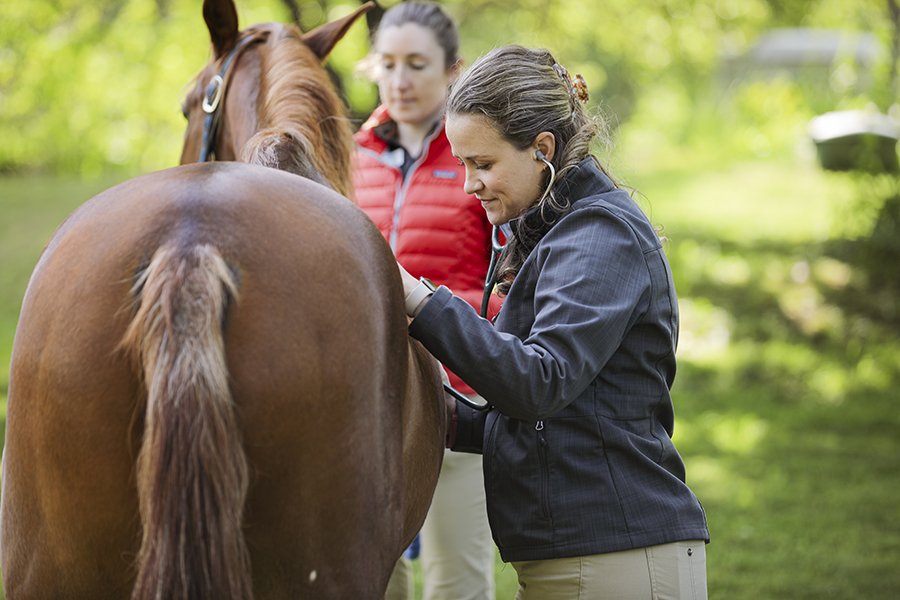
You can check your horse’s heart rate with a stethoscope just behind the left elbow, or by feeling the artery under the jaw. Count the beats for 15 seconds and multiply by four to get beats per minute.
3. Respiration
Watch your horse’s flank or nostrils as they breathe. Count one inhale and one exhale as one breath. Count for 15 seconds and multiply by four. Breathing should be quiet, regular, and not labored.
4. Gum Color and Capillary Refill Time
Lift the upper lip and look at the gums. Healthy gums are usually pink and moist. Press your finger on the gum until it blanches, then release. Color should return within about two seconds. Pale, dark red, purple, blue, dry, or tacky gums can be concerning.
5. Gut Sounds
Place your ear or a stethoscope against both sides of the abdomen. You should hear gurgling sounds. Decreased or absent gut sounds, especially with signs of pain, can be important information to share with your veterinarian.
When to Call Rhinebeck Equine
Call us if your horse’s vital signs are outside their normal range, if your horse is acting painful, dull, off feed, colicky, lame, breathing hard, sweating unexpectedly, or if something simply does not seem right. In an emergency, taking and sharing your horse’s temperature, pulse, respiration, gum color, and capillary refill time can help us respond quickly and appropriately.